Flask vs FastAPI: Choosing the Right Python Framework for Your Web Project
By Emmanuel Chinonso - Frontend Engineer and Technical Writer at Windframe
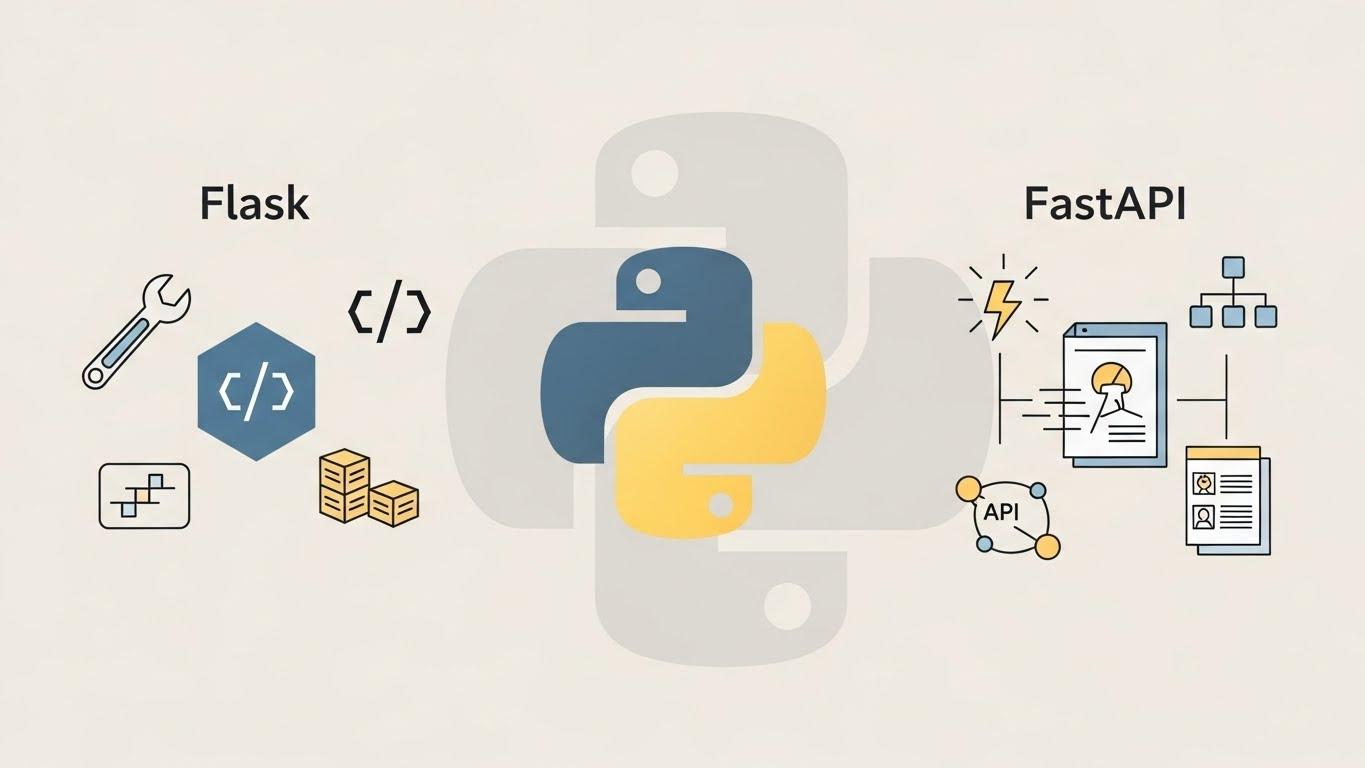
Python’s rise as a backend language didn’t happen by accident. Over the years, it has proven itself as a dependable choice for building web applications, internal tools, APIs, and data-driven systems. Developers are drawn to Python not just because it’s easy to read, but because it scales with you, especially when comparing Python frameworks like Flask to JavaScript-based options such as Node.js.
If you spend any time in the Python backend ecosystem, two names come up again and again: Flask and FastAPI.
Both are lightweight frameworks. Both are widely used. Both can power real production systems. Yet they feel very different in practice, and choosing between them can shape how your application grows, how your team works, and how easy it is to maintain your code over time, just like the trade-offs developers face when comparing NestJS and Express in the Node.js ecosystem.
This article is written to help you understand those differences in a practical way. Not just what Flask and FastAPI are, but how they work, how they feel to use, and how to decide which one makes sense for your project, especially if you’re still learning backend development.
Why Comparing Flask and FastAPI Isn’t as Simple as It Sounds
On the surface, Flask and FastAPI appear similar. They both let you define routes, handle requests, and return responses. Neither forces a strict project structure. Neither ships with a built-in ORM or admin interface.
But the similarity mostly ends there.
Flask represents a minimal, explicit approach to web development. It gives you the basics and lets you build upward however you choose.
FastAPI represents a modern, API-first approach, designed for a world where services talk to each other constantly, where validation matters, and where documentation is expected by default. Understanding that difference early will save you a lot of confusion later.
Flask: Understanding the “Microframework” Philosophy
Flask was released in 2010 by Armin Ronacher. At the time, many developers felt that existing frameworks were too heavy for small or medium-sized projects. Flask’s goal was simple: provide just enough functionality to build a web application, without forcing decisions too early.
That philosophy is still visible today.
A First Flask Application (Hello World)
Let’s start with the simplest possible Flask app:
1from flask import Flask23app = Flask(__name__)45@app.route("/")6def home():7 return "Hello, Flask!"89if __name__ == "__main__":10 app.run(debug=True)
What’s Happening Here?
-
Flask(__name__)creates your application instance -
@app.route("/")maps the root URL (/) to a Python function -
Whatever the function returns becomes the HTTP response
-
app.run()starts a development server
There’s nothing hidden here. No magic. Flask does exactly what you tell it to do.
For beginners, this is powerful. You can clearly see how URLs connect to functions and how responses are generated.
Flask’s Strength: Control and Transparency
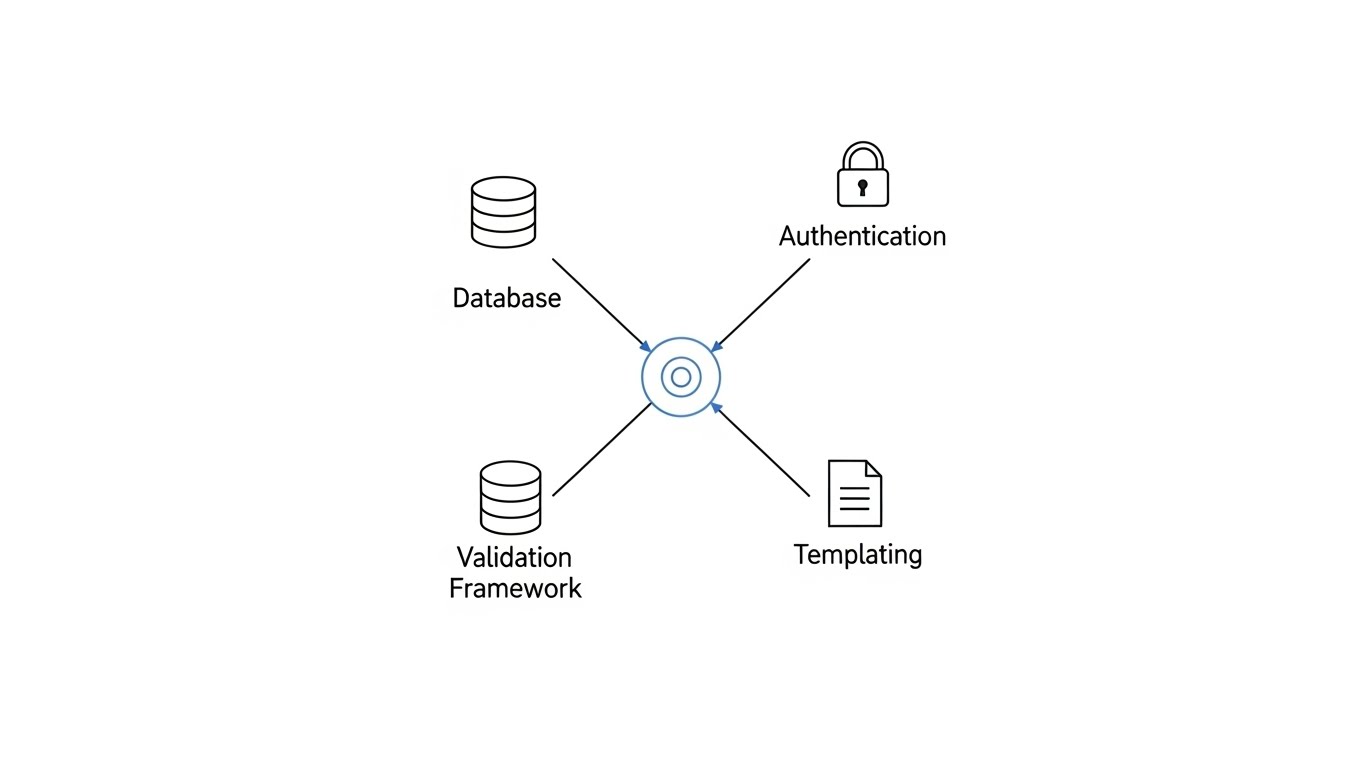
Flask doesn’t assume much about your project. That’s both its biggest strength and its biggest responsibility.
If you want:
-
A database → you choose how to connect it
-
Authentication → you decide how it works
-
Validation → you add it explicitly
For example, Flask does not validate incoming request data automatically. If you’re accepting JSON input, you handle it yourself.
Example: Handling JSON in Flask
1from flask import Flask, request, jsonify23app = Flask(__name__)45@app.route("/items", methods=["POST"])6def create_item():7 data = request.get_json()89 if "name" not in data or "price" not in data:10 return jsonify({"error": "Invalid input"}), 4001112 return jsonify({13 "name": data["name"],14 "price": data["price"]15 }), 201
Here, you:
-
Manually extract the request body
-
Manually check required fields
-
Manually return errors
This is explicit and flexible, but it can become repetitive as your application grows, especially when you’re building full RESTful APIs in Flask with multiple endpoints and validation rules.
FastAPI: Built for APIs from Day One
FastAPI was released in 2018, long after APIs had become central to modern applications. Instead of evolving into API support, FastAPI was designed around it from the start.
Its goal was to make API development:
-
Faster
-
Safer
-
Easier to maintain
A First FastAPI Application (Hello World)
Here’s the FastAPI equivalent of “Hello World”:
1from fastapi import FastAPI23app = FastAPI()45@app.get("/")6def home():7 return {"message": "Hello, FastAPI!"}
To run it:
1uvicorn main:app --reload
Now visit:
-
http://127.0.0.1:8000/→ your API response -
http://127.0.0.1:8000/docs→ automatic interactive documentation
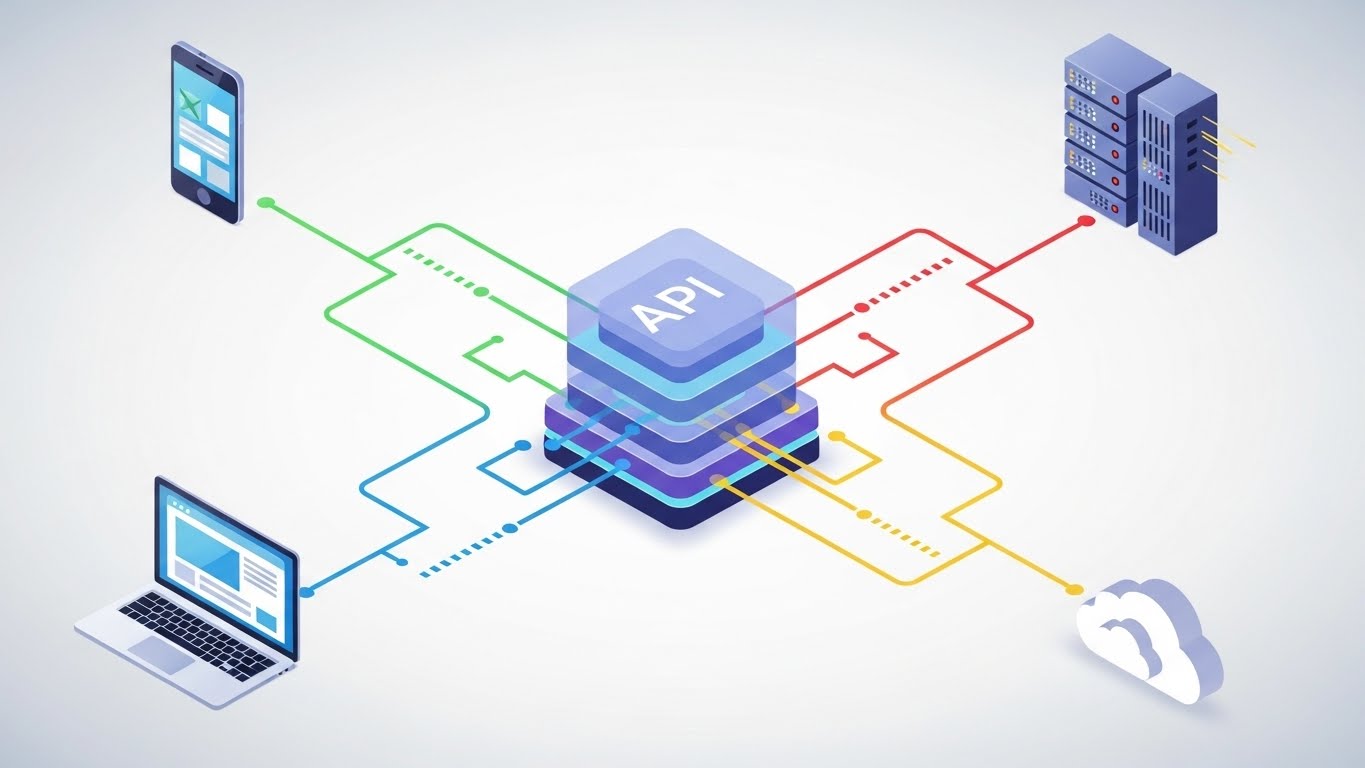
That /docs page is not an add-on. It’s generated automatically from your code.
Why FastAPI Feels Different Immediately
FastAPI relies heavily on Python type hints. This allows it to understand your data in a way Flask doesn’t by default.
Example: Data Validation in FastAPI
1from fastapi import FastAPI2from pydantic import BaseModel34app = FastAPI()56class Item(BaseModel):7 name: str8 price: float910@app.post("/items")11def create_item(item: Item):12 return item
What You Get Automatically
Without writing extra code, FastAPI provides:
-
Validation of incoming JSON
-
Clear error messages if data is invalid
-
Type-safe request handling
-
Documentation showing expected fields
If a client sends incorrect data, FastAPI responds with a structured error explaining exactly what went wrong.
This alone eliminates an entire class of bugs that are common in Flask apps unless you add validation libraries.
Architecture Explained Simply: WSGI vs ASGI
One of the most important differences between Flask and FastAPI has nothing to do with syntax.
Flask Uses WSGI (Synchronous)
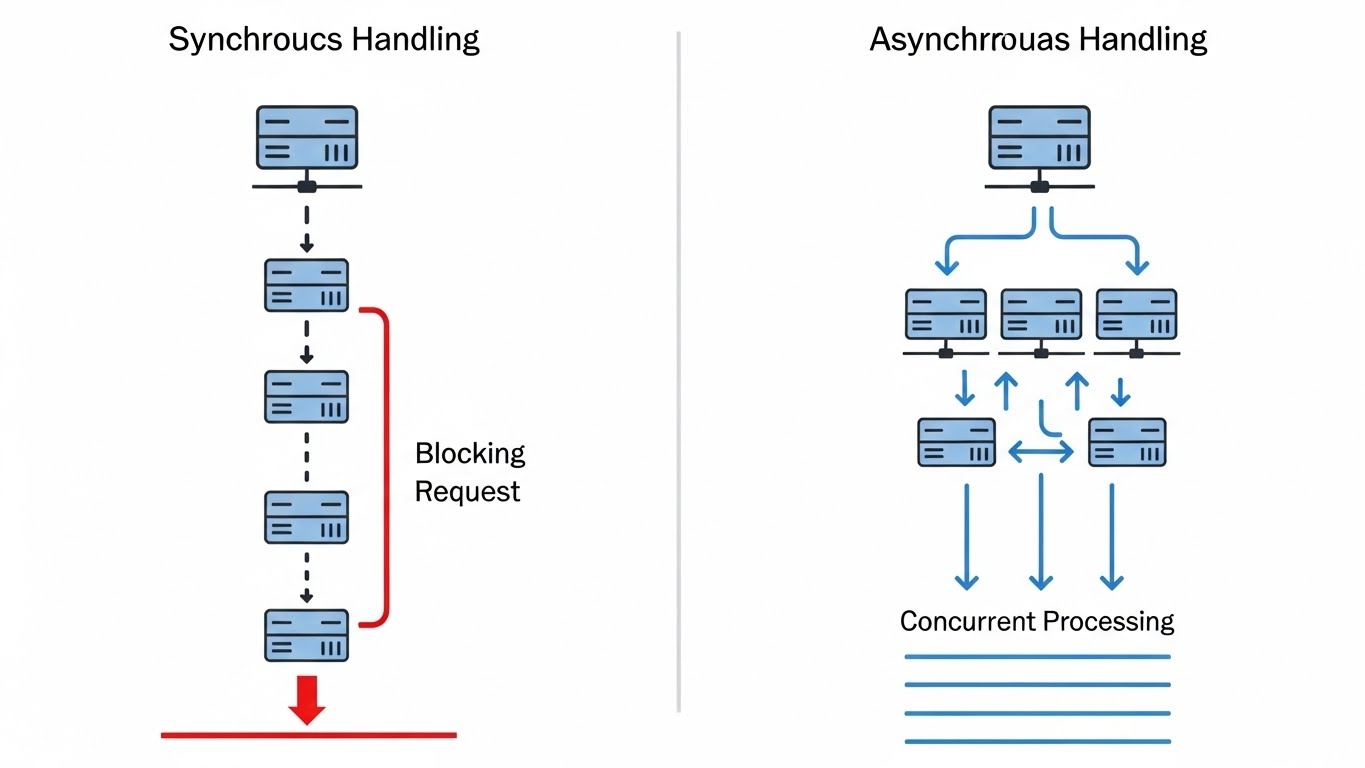
Flask handles requests one at a time per worker. If a request is waiting on:
-
A database query
-
An external API
-
A file operation
That worker is blocked until the task finishes. This is fine for many applications, especially traditional websites.
FastAPI Uses ASGI (Asynchronous)
FastAPI supports async request handling. While one request waits for I/O, another can be processed.
Simple Async Example in FastAPI
1import asyncio2from fastapi import FastAPI34app = FastAPI()56@app.get("/wait")7async def wait():8 await asyncio.sleep(2)9 return {"status": "done"}
During that 2-second wait, FastAPI can continue handling other requests.
This is extremely useful for:
-
High-traffic APIs
-
Microservices
-
Real-time systems
Async is powerful, but it also adds complexity. You don’t need it unless your workload benefits from it.
Performance: When Does FastAPI Actually Win?
FastAPI often performs better under high concurrency, especially when:
-
Requests involve waiting on I/O
-
Many users hit the API at the same time
However, performance problems are often caused by:
-
Slow database queries
-
Missing indexes
-
Network latency
-
Poor caching
In those cases, switching frameworks won’t fix the issue.
Flask performs extremely well for:
-
Low to medium traffic
-
Server-rendered apps
-
CPU-heavy tasks
Developer Experience: How It Feels Day to Day
Flask’s Experience
Flask feels like working close to the metal:
-
You know what your code does
-
Debugging is straightforward
-
Behavior is predictable
The downside is that larger applications require discipline and structure from the developer.
FastAPI’s Experience
FastAPI feels more guided:
-
Less boilerplate
-
Fewer validation bugs
-
Built-in documentation
The trade-off is a steeper learning curve, especially if you’re new to:
-
Type hints
-
Async programming
Documentation: A Real Productivity Difference
With Flask:
-
Documentation is optional
-
You must add tools and maintain it manually
With FastAPI:
-
Documentation is automatic
-
It stays in sync with your code
For teams, this can dramatically reduce onboarding time and communication errors.
Choosing Based on Real Projects
Choose Flask If:
-
You’re building a traditional web app
-
You want full control over architecture
-
You’re learning backend fundamentals
-
Your app doesn’t need extreme concurrency
Choose FastAPI If:
-
You’re building APIs as a product
-
You need validation and docs by default
-
You expect high concurrency
-
You’re working with frontend or mobile teams
Many companies use both, depending on the service.
Wrapping up
Flask and FastAPI are not competing for the same throne. They represent different approaches to solving web development problems. Flask offers clarity, control, and maturity. FastAPI offers speed, structure, and modern tooling.
The best choice is the one that aligns with your project’s goals, your team’s skills, and your long-term plans.
Focus on building reliable, maintainable software. The framework is just the tool, how you use it matters far more.
Windframe is an AI visual editor for rapidly building stunning web UIs & websites
Start building stunning web UIs & websites!